← Back to Scholarship Essay Guides
How to Write a Strong Cooke College Scholarship Essay
Published Apr 30, 2026
Written by ScholarshipTop AI • Reviewed by Editorial Team
Start by Reading the Prompt Like an Evaluator
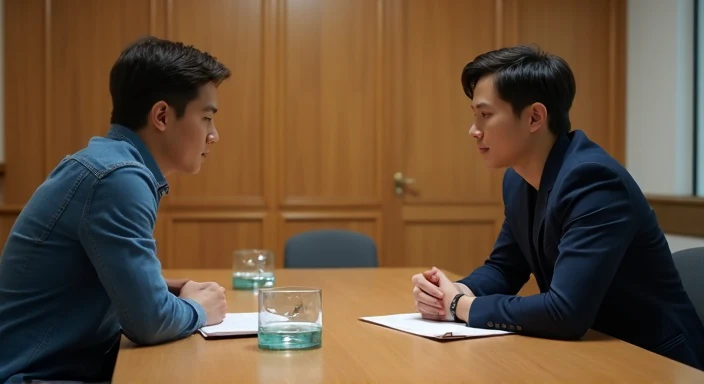
Before you draft a single sentence, identify what the essay is actually asking you to prove. Scholarship committees rarely want a generic life story. They want evidence that you have used your opportunities well, responded seriously to constraints, and can make strong use of future support. Even if the prompt sounds broad, treat it as a request for judgment: What should a reader believe about you by the final paragraph?
Find your Brain Archetype before writing your essay
Turn self-reflection into a clearer story. Take a comprehensive cognitive assessment and get your IQ score, percentile, and strengths across logic, speed, spatial reasoning, and patterns.
Preview report
IQ
--
Type
???
Write that answer in one line before you begin. A useful version sounds like this: After reading my essay, the committee should understand how I turned a specific challenge or opportunity into measurable growth, and why further support would expand that trajectory. That sentence is not your opening line. It is your drafting compass.
Next, underline the prompt’s operative verbs and nouns. If it asks you to discuss an experience, explain goals, reflect on obstacles, or describe impact, each of those tasks deserves space in your essay. Many applicants fail not because they lack substance, but because they answer only half the question. Build your outline around the actual demands of the prompt, not around the story you most want to tell.
As you read, ask four practical questions:
- What must I show? Character, judgment, persistence, initiative, intellectual seriousness, service, or future direction.
- What evidence can prove it? Responsibilities held, outcomes achieved, constraints navigated, choices made.
- What is the turning point? The moment when something changed in your thinking, standards, or direction.
- What is at stake? Why this story matters beyond being memorable.
This approach keeps you from writing an essay that is vivid but unpersuasive. A scholarship essay must do both jobs at once.
Brainstorm Across Four Material Buckets
Your strongest essay usually draws from four kinds of material: what shaped you, what you have done, what you still need, and what makes you recognizably human on the page. Brainstorm each bucket separately before you decide on a final topic. That process helps you avoid two common problems: writing a résumé in paragraph form, or writing a heartfelt story with no evidence of follow-through.
1. Background: What shaped your perspective?
This is not a request for a full autobiography. Focus on forces that changed how you work, think, or prioritize. Useful material may include family responsibilities, school context, community conditions, migration, financial constraints, a formative class, a mentor, or a local problem you could not ignore. The key is not the fact itself but its effect on your standards and decisions.
- What environment taught you to notice a problem others overlooked?
- What responsibility matured you earlier than expected?
- What limitation forced you to become resourceful?
2. Achievements: What have you actually done?
List actions with accountable detail. Include leadership, work, research, caregiving, organizing, creative production, academic initiative, or community impact. Push past titles. A committee learns more from what you changed than from the position you held.
- What did you build, improve, launch, lead, or repair?
- How many people were affected, over what period of time?
- What problem existed before you acted, and what was different after?
If you have numbers, use them honestly. If you do not, use concrete scope: weekly hours, team size, number of events, duration, or level of responsibility.
3. The gap: Why do you need further support?
This is where many essays become vague. Do not simply say that college is expensive or that education matters. Explain the specific distance between where you are now and what you are trying to do next. That distance may involve limited access to coursework, financial pressure, family obligations, lack of local opportunities, or the need for training that your current environment cannot provide.
The strongest version links need to readiness. In other words: I have already moved this far through disciplined action; with further support, I can extend that work at a higher level. This framing shows seriousness rather than dependency.
4. Personality: Why will the reader remember you?
Personality is not a list of adjectives. It appears through choices, details, and voice. Maybe you keep a notebook of questions from your job, rebuild old devices, translate for relatives, stay after meetings to solve logistics, or revise a school project until it can survive real-world use. Small, precise details make an essay credible and memorable.
After brainstorming, look for overlap among the four buckets. The best essay topics often sit at the intersection of all four: a shaping context, a concrete action, a real unmet need, and a human detail that makes the story feel lived rather than assembled.
Choose a Core Story and Build a Tight Outline
Once you have raw material, choose one central thread. Do not try to cover your entire life. A focused essay usually persuades more effectively than an exhaustive one because it gives the reader a clear line of cause, action, and consequence.
Get matched with scholarships in 2 minutes
A practical outline often looks like this:
- Opening scene or concrete moment: Begin inside a real situation, not with a thesis about your values.
- Context: Explain what made the moment significant and what responsibility or challenge was present.
- Action: Show what you did, step by step, with agency and specificity.
- Result: State what changed, including measurable outcomes where possible.
- Reflection: Explain what the experience taught you about your methods, priorities, or future direction.
- Forward link: Connect that insight to why scholarship support would matter now.
This structure works because it gives the committee both evidence and interpretation. Evidence alone can feel mechanical. Reflection alone can feel ungrounded. Together, they show maturity.
When selecting your opening moment, avoid broad declarations such as “Education has always been important to me” or “I have always wanted to make a difference.” Instead, open with a scene that places the reader somewhere specific: a shift at work, a classroom problem, a family obligation, a community meeting, a failed first attempt, a spreadsheet, a lab bench, a bus ride between commitments. The point is not drama for its own sake. The point is to ground your argument in reality.
As you outline, keep one idea per paragraph. If a paragraph tries to explain your background, your project, your goals, and your financial need all at once, split it. Clear paragraphs help the reader trust your thinking.
Draft With Specificity, Reflection, and Forward Motion
When you begin drafting, write in active voice whenever a human subject exists. “I organized,” “I redesigned,” “I tutored,” “I tracked,” “I proposed,” and “I learned” are stronger than sentences built around abstractions. This is not about sounding aggressive. It is about making responsibility visible.
As you draft each paragraph, ask two questions: What happened? and So what? The first gives the reader facts. The second gives the reader meaning. Strong scholarship essays answer both.
How to write the opening
Your first paragraph should create attention through specificity, not through grand claims. A good opening often includes three elements: a concrete setting, a live problem, and your role within it. Keep it short enough that the essay can move quickly into substance.
For example, if your experience includes balancing school with paid work or family care, do not merely state that you faced hardship. Show one moment that reveals the pressure and your response. Then move outward to explain why that moment mattered.
How to write the middle
The middle paragraphs should show progression. What challenge did you face? What did you decide to do? What obstacles complicated the effort? What changed because of your actions? Be honest about setbacks. Essays become more persuasive when they show adjustment, not perfection.
Use detail that carries weight:
- Timeframes: one semester, two years, every weekend, three nights a week.
- Scope: a team of five, one younger sibling, a class project expanded schoolwide.
- Outcomes: attendance increased, a process became faster, students returned, funds were raised, grades improved, a program continued after you left.
If your result was not dramatic, do not inflate it. Explain the real significance. Sometimes the strongest evidence is sustained reliability under pressure.
How to write the ending
Your conclusion should not simply repeat your introduction. It should show what the experience clarified about your next step. Connect past action to future use of opportunity. Keep that connection concrete. What kind of study, training, or environment will help you deepen the work you have already begun? Why are you ready for it now?
The final note should feel earned: not “I deserve this,” but “My record shows how I work, what I have learned, and what I am prepared to do next.”
Revise for Depth: Cut Summary, Strengthen Meaning
Revision is where a decent draft becomes competitive. On a second pass, do not edit sentences first. Edit for argument. Print the essay or paste it into a separate document and label each paragraph by function: scene, context, action, result, reflection, future direction. If two paragraphs do the same job, combine them. If a paragraph has no clear job, cut it.
Then test for depth. In every major section, underline the sentence that answers “So what?” If you cannot find one, the paragraph is probably descriptive but not yet persuasive. Add reflection that explains what changed in you: your standards, your methods, your understanding of a problem, or your sense of responsibility.
Next, test for specificity. Circle vague words such as “impact,” “leadership,” “passion,” “community,” “hard work,” and “success.” Keep them only if the surrounding sentences define them through action and evidence. Otherwise replace them with concrete detail.
Finally, test for coherence. Read the first sentence of every paragraph in order. Do they form a logical progression? A strong essay should move, not wander. The reader should feel guided from one insight to the next.
Revision checklist
- Opening: Does the essay begin with a real moment rather than a generic claim?
- Focus: Can the essay’s main point be stated in one sentence?
- Evidence: Have you shown actions, responsibilities, and outcomes?
- Reflection: Have you explained why the experience mattered?
- Need and next step: Have you shown the gap between your current position and what further support would enable?
- Voice: Does the essay sound like a thoughtful person, not a brochure?
- Paragraph discipline: Does each paragraph do one clear job?
- Language: Have you cut filler, clichés, and inflated claims?
Mistakes That Weaken Scholarship Essays
The most common problems are avoidable. Many essays lose force not because the applicant lacks merit, but because the writing hides it.
- Starting with a cliché. Avoid openings such as “From a young age,” “I have always been passionate about,” or “Ever since I can remember.” These phrases waste valuable space and make different applicants sound interchangeable.
- Listing achievements without a story. A résumé already lists activities. The essay should interpret them.
- Telling hardship without agency. Difficulty matters, but the committee also needs to see judgment, initiative, and response.
- Making claims without proof. If you say you led, explain what you changed. If you say you care, show what you did.
- Sounding inflated. Do not overstate outcomes or use praise words as substitutes for evidence.
- Writing in abstractions. Replace broad nouns with people, actions, places, and decisions.
- Forgetting the future link. A scholarship essay should not end in the past. Show how support fits the next stage of your development.
One final standard is worth keeping in mind: the committee is not looking for a perfect life. It is looking for seriousness of purpose, credible follow-through, and a mind that can learn from experience. If your essay shows those qualities through concrete evidence and honest reflection, it will do its job well.
FAQ
How personal should my Cooke College Scholarship essay be?
Should I focus more on hardship or achievement?
Can I reuse a personal statement from a college application?
Related articles
Related scholarships
Browse the full scholarship catalog — filter by deadline, category, and more.
- NEW
College Loret Ruppe International Student Scholarship
offers this scholarship to help cover education costs. The listed award is $1,000 to $24,000. Plan to apply by Rolling: Start in January or June or September.
$1.000 to $24.000
Award Amount
Paid to school
Rolling: Start in January or June or September
None
Requirements
Rolling: Start in January or June or September
None
Requirements
$1.000 to $24.000
Award Amount
Paid to school
- VerifiedNEW
Hubert Humphrey in USA for International Students
Fellows are placed at one of the participating USA universities . Fellows are not able to choose which university they will attend. Rather, they are assigned in diverse groups of 7-15 to the most appropriate host institution based on their area of interest and professional field. Level/Field of study: As a non-degree program, the Fellowship offers valuable opportunities for professional development through…
RecurringAmount Varies
Award Amount
Paid to school
Oct 1
Annual deadline
1 requirement
Requirements
Oct 1
Annual deadline
1 requirement
Requirements
Amount Varies
Award Amount
Paid to school
- NEW
foundation Scholarships for International Students
offers this scholarship to help cover education costs. The listed award is 50% tuition fee waiver. Plan to apply by 2 February.
50% tuition fee waiver
Award Amount
Feb 2
5 requirements
Requirements
Feb 2
5 requirements
Requirements
50% tuition fee waiver
Award Amount
- NEW
College & State University International Student Scholarship
offers this scholarship to help cover education costs. The listed award is Over 18,000 USD/YR. Plan to apply by April 1; September 1.
Over 18.000 USD/YR
Award Amount
Apr 1
None
Requirements
Apr 1
None
Requirements
Over 18.000 USD/YR
Award Amount
- NEW
Nan Institute Buddhist Studies Scholarship – International Students
offers this scholarship to help cover education costs. The listed award is Variable.
Variable
Award Amount
—
2 requirements
Requirements
—
2 requirements
Requirements
Variable
Award Amount