в†ђ Back to Scholarship Essay Guides
How To Write the Pilot Club of Marianna Nursing Scholarship Essay
Published Apr 29, 2026
Written by ScholarshipTop AI • Reviewed by Editorial Team
Understand What This Essay Needs To Prove
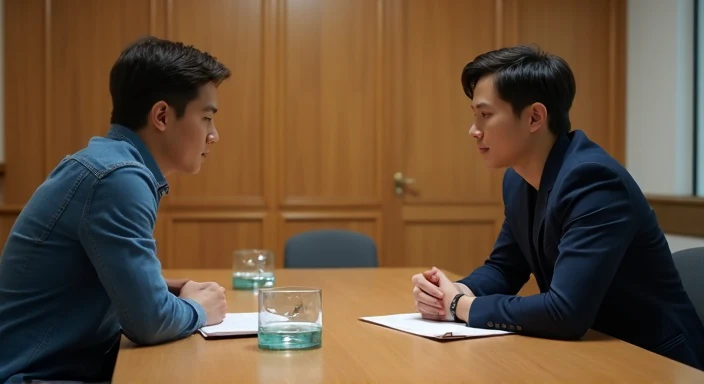
For a nursing-focused scholarship tied to study at Chipola College, your essay should do more than say that you want financial help. It should show that you are prepared for the demands of nursing study, that your interest in care has substance behind it, and that support would help you move from intention to contribution. Even if the application prompt is short, the committee is still reading for judgment, follow-through, and fit.
Find your Brain Archetype before writing your essay
Turn self-reflection into a clearer story. Take a comprehensive cognitive assessment and get your IQ score, percentile, and strengths across logic, speed, spatial reasoning, and patterns.
Preview report
IQ
--
Type
???
Start by identifying the real question under the question. In most scholarship essays, readers want to know some version of three things: Who are you? What have you done that shows readiness? Why does this next step matter now? If the prompt asks about goals, service, financial need, or career plans, answer that directly—but build your response around evidence, not slogans.
A strong opening usually begins with a concrete moment rather than a thesis statement. Instead of announcing that you care about nursing, begin with a scene, decision, or responsibility that reveals how you learned what care requires. The point is not drama for its own sake. The point is to give the committee a reason to trust your perspective from the first paragraph.
Brainstorm Your Material in Four Buckets
Before drafting, gather raw material in four categories. This keeps your essay grounded and helps you avoid repeating the same claim in different words.
1. Background: what shaped you
List experiences that influenced your view of health, responsibility, education, or service. These might include family caregiving, work, community involvement, a health challenge, military service, church or civic commitments, or being the person others rely on in difficult moments. Choose experiences that changed how you think or act, not just events that happened near you.
- What moment first made nursing feel concrete rather than abstract?
- What responsibilities have matured you?
- What environment taught you resilience, patience, or steadiness?
2. Achievements: what you have already shown
Scholarship readers trust specifics. Gather academic results, clinical exposure if you have it, work history, leadership, volunteer service, certifications, and measurable outcomes. If you balanced school with employment or family duties, that counts as evidence of discipline. If you improved a process, trained others, or served consistently over time, include that.
- How many hours did you work or volunteer?
- What responsibility was yours alone?
- What changed because you acted?
- What did a supervisor, teacher, or patient-facing role teach you about accountability?
3. The gap: why further study fits
This is where many essays stay vague. Do not just say that education will help you achieve your dreams. Name the distance between where you are and where you need to be. Maybe you need formal training, clinical preparation, licensure pathways, stronger scientific grounding, or the financial stability to stay focused on coursework. The committee should understand why this scholarship matters at this stage.
- What can you not yet do without nursing education?
- What barrier makes this support meaningful?
- Why is now the right time to pursue this path?
4. Personality: what makes you memorable
Committees do not fund bullet points; they fund people. Add details that reveal how you move through the world: calm under pressure, observant with patients, dependable in teams, honest about limits, willing to learn. The best personality details are small and credible. A brief habit, phrase, or moment of self-correction can humanize the essay more than a page of self-praise.
Once you have notes in all four buckets, circle the items that connect naturally. Usually the best essay does not cover everything. It selects one shaping thread, two or three strong pieces of evidence, and one clear explanation of what the scholarship makes possible.
Build an Essay Structure That Moves Forward
Your essay should feel like progress, not a list. A useful structure is: opening moment, explanation of what that moment revealed, evidence of readiness, the gap you need to close, and the future you are preparing to serve. This shape helps the reader see both character and direction.
- Paragraph 1: Open with a real moment. Begin in action: a shift, a conversation, a caregiving task, a classroom challenge, a work responsibility, or a decision point. Keep it brief and concrete.
- Paragraph 2: Interpret the moment. Explain what you learned and why it changed your understanding of nursing, responsibility, or service. This is where you answer, “So what?”
- Paragraph 3: Prove readiness. Show achievements with accountable detail: coursework, work ethic, service, leadership, persistence, or improvement over time.
- Paragraph 4: Name the gap. Explain what further study at Chipola College would help you gain and why scholarship support matters in practical terms.
- Paragraph 5: End with grounded forward motion. Close by connecting your preparation to the kind of nurse, student, or community member you are working to become.
Get matched with scholarships in 2 minutes
If the word limit is short, compress this structure rather than abandoning it. You still need a moment, evidence, and a clear reason the scholarship matters now. In a shorter essay, one example can do double duty if you describe it well and reflect on it honestly.
Draft With Specificity, Reflection, and Control
When you draft, keep each paragraph focused on one job. Do not let a paragraph try to tell your life story, explain financial need, and state career goals all at once. Strong essays feel controlled because each paragraph advances one idea and hands the reader cleanly to the next.
Use specific evidence
Replace broad claims with details the committee can picture and trust. “I am hardworking” is weak. “I carried a full course load while working twenty hours a week and still kept up with lab preparation” is stronger because it shows the behavior. Numbers, timeframes, and responsibilities matter when they are accurate and relevant.
Reflect instead of merely reporting
Many applicants describe events but never explain their significance. After each example, add a sentence that interprets it. What did the experience teach you about patient dignity, teamwork, stamina, communication, or the limits of good intentions without training? Reflection is what turns a résumé point into an essay.
Choose active, direct sentences
Prefer sentences with a clear actor. Write “I organized transportation for my family member’s appointments” rather than “Transportation was organized for appointments.” Clear subjects make you sound responsible and credible. They also reduce the vague, inflated tone that weakens scholarship writing.
Sound serious, not theatrical
Nursing essays do not need melodrama. They need steadiness. If you write about illness, caregiving, or hardship, keep the focus on what you observed, did, learned, and now seek to build. Understatement often carries more authority than emotional overstatement.
Revise by Asking “So What?” in Every Section
Revision is where a decent essay becomes persuasive. After drafting, read each paragraph and ask two questions: What is this paragraph doing? and Why should the committee care? If you cannot answer both in one sentence, the paragraph may be unfocused.
- Opening: Does it begin with a concrete moment rather than a generic declaration?
- Background: Does it explain what shaped you without turning into a long autobiography?
- Achievements: Does it include evidence, responsibility, and outcomes?
- Gap: Does it clearly explain why nursing education and scholarship support matter now?
- Personality: Does the reader get a sense of your character beyond accomplishments?
- Conclusion: Does it look forward with purpose rather than repeat the introduction?
Then revise for sentence-level strength. Cut filler, repeated ideas, and abstract phrases that could belong to anyone. Replace “I have always wanted to help people” with the actual experience that taught you what helping requires. Replace “This scholarship would mean a lot to me” with the practical and educational difference it would make.
Finally, check alignment. If the application asks about nursing goals, make sure your strongest material supports that question. If it asks about need, do not spend the entire essay on inspiration while leaving the practical barrier unexplained. The best essays feel tailored because every paragraph answers the prompt from a different angle.
Avoid the Mistakes That Make Essays Forgettable
Some weaknesses appear so often that avoiding them already improves your chances of writing a stronger essay.
- Generic openings. Avoid lines like “I have always been passionate about nursing” or “From a young age, I knew…” These tell the reader nothing distinctive.
- Unproven virtue words. Words like compassionate, dedicated, and hardworking only matter if your examples earn them.
- Résumé dumping. A list of activities without reflection does not create a narrative or show judgment.
- Overwriting. Long, emotional sentences can blur your point. Simpler sentences often sound more mature.
- Vague future plans. “I want to make a difference” is too broad. Explain what kind of work, community, or responsibility you hope to grow into.
- Ignoring the scholarship context. Keep the essay connected to nursing study and the educational step in front of you, not just distant ambitions.
Also be careful with stories involving patients, family health, or private hardship. Share only what is necessary to explain your growth and motivation. Respect privacy, avoid sensational detail, and keep the focus on your development and readiness for study.
Use a Final Checklist Before You Submit
Before submitting, read the essay once for meaning and once for mechanics. On the first pass, check whether the essay sounds like a real person with a real path into nursing. On the second, check grammar, punctuation, word count, and clarity.
- Can someone summarize your essay’s main point in one sentence?
- Does the first paragraph create interest through a concrete moment?
- Does each body paragraph have one clear purpose?
- Have you included at least two or three specific details that only you could write?
- Have you explained what changed in you, not just what happened around you?
- Does the essay make clear why scholarship support matters for your next step?
- Have you removed clichés, inflated claims, and repeated phrases?
- Did you proofread names, dates, and any references to Chipola College?
If possible, ask a trusted reader to answer three questions after reading: What do you remember most? Where did you want more detail? What felt generic? Their answers will tell you whether your essay is landing as intended.
The strongest final draft will not try to sound perfect. It will sound observant, accountable, and ready to grow. That is the combination scholarship committees tend to trust.
FAQ
How personal should my nursing scholarship essay be?
What if I do not have formal healthcare experience yet?
Should I talk about financial need in the essay?
Related articles
Related scholarships
Browse the full scholarship catalog — filter by deadline, category, and more.
- NEW
X TOGETHER (TXT) MOA Scholarship
offers this scholarship to help cover education costs. The listed award is $33685. Plan to apply by July 13, 2026.
384 applicants
$33,685
Award Amount
Direct to student
Jul 13, 2026
75 days left
2 requirements
Requirements
Jul 13, 2026
75 days left
2 requirements
Requirements
$33,685
Award Amount
Direct to student
EducationMedicineLawCommunityMusicFew RequirementsWomenInternational StudentsHispanicFirst-GenerationFinancial NeedHigh School SeniorHigh SchoolUndergraduateGraduatePhDTrade SchoolDirect to studentGPA 3.0+CAFLGAHINYNCPATXUT - NEW
Not to Escape Study Abroad Scholarship
offers this scholarship to help cover education costs. The listed award is $1500. Plan to apply by May 23, 2026.
202 applicants
$1,500
Award Amount
May 23, 2026
24 days left
3 requirements
Requirements
May 23, 2026
24 days left
3 requirements
Requirements
$1,500
Award Amount
ArtsEducationWomenInternational StudentsFinancial NeedUndergraduateGraduateGPA 3.5+ - NEW
DK Memorial Broadcasting Scholarship
offers this scholarship to help cover education costs. The listed award is $2500. Plan to apply by May 17, 2026.
34 applicants
$2,500
Award Amount
May 17, 2026
18 days left
2 requirements
Requirements
May 17, 2026
18 days left
2 requirements
Requirements
$2,500
Award Amount
EducationFew RequirementsWomenInternational StudentsFinancial NeedHigh School SeniorHigh SchoolUndergraduateGraduatePhDCommunity CollegeGPA 3.5+CAFLLA - NEW
Christian Sun Legacy Scholarship
offers this scholarship to help cover education costs. The listed award is $20000. Plan to apply by May 10, 2026.
26 applicants
$20,000
Award Amount
May 10, 2026
11 days left
4 requirements
Requirements
May 10, 2026
11 days left
4 requirements
Requirements
$20,000
Award Amount
EducationHumanitiesSTEMCommunityAfrican AmericanDisabilityInternational StudentsHispanicFirst-GenerationFinancial NeedHigh School SeniorHigh SchoolUndergraduateGraduateGPA 3.5+RI - NEW
ADP Scholarship
offers this scholarship to help cover education costs. The listed award is $500. Plan to apply by April 23, 2026.
16 applicants
$500
Award Amount
Direct to student
Apr 23, 2026
deadline passed
3 requirements
Requirements
Apr 23, 2026
deadline passed
3 requirements
Requirements
$500
Award Amount
Direct to student
EducationCommunityGraduateDirect to studentGPA 3.5+MDNMMaryland